
Healthcare hiring in 2026 feels like more than just recruiting. It feels like strategy, storytelling, and a little bit of survival instinct.
In our recent webinar, Strategic Health Care Hiring: How to Reach, Engage, and Inspire the Right Candidates, Appcast experts Caitlan Wrona and Erika Boutain unpacked what’s really changing in the market and what talent acquisition teams can do about it.
If you’re hiring in healthcare, you already know the truth: The old playbook is done. Job posts alone won’t save you, more clicks won’t fix it and “we’re like a family” isn’t convincing anyone.
Let’s get into what actually matters.
The Reality Check: Healthcare Talent Is Shopping
As Caitlan Wrona explained, “Nurses are not simply looking for a job. They are shopping.”
Today’s candidates are comparing schedules, reading reviews, pressure-testing your reputation, and even asking AI tools which employer is worth their time. Nurses, for example, have become increasingly selective, and are seeking opportunities that align with their professional and personal priorities,
At the same time, the fundamentals haven’t eased up. Demand is high, supply is constrained, and expectations keep climbing.
And beneath all of that, something bigger is happening. Nursing job satisfaction has recently dropped by 8%, erasing gains made since 2022, and 23% of nurses report they are likely to leave the profession entirely within the next year.
This is not just a hiring problem. It’s a trust problem.
Why More Applications Doesn’t Mean Better Hiring
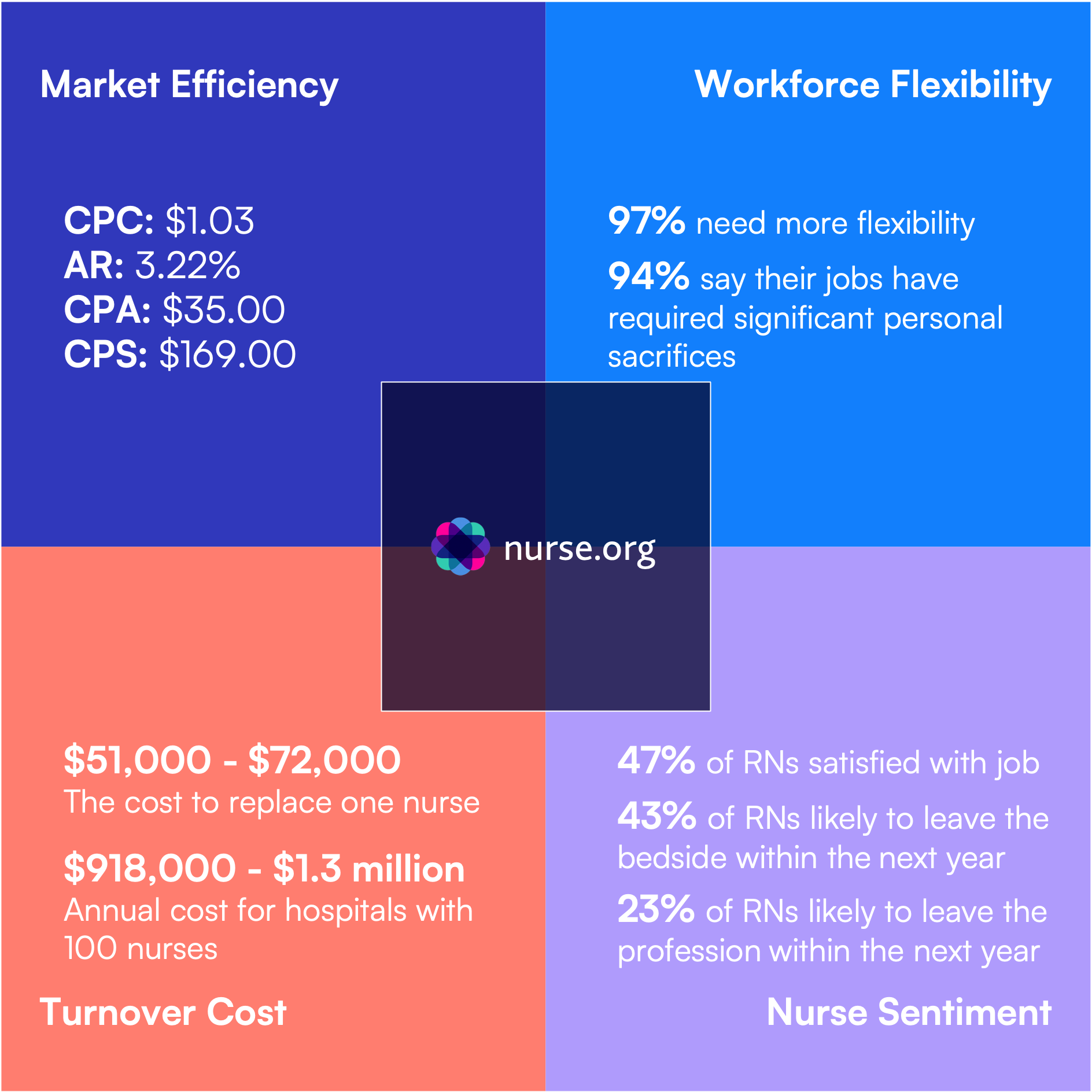
These numbers show that healthcare hiring is under pressure from every angle, rising costs, shifting expectations, and a workforce that’s asking for more flexibility and support.
Posting jobs and hoping the right candidates show up is not a strategy. It is a gamble that can cost you the wrong hire. And when replacing a single nurse can cost tens of thousands of dollars, every mismatch matters.
The shift is simple, but not easy. Stop chasing volume and start focusing on fit.
That means being clear about what the role actually is, who it works for, and who it doesn’t. It means helping the right candidates lean in and giving others permission to opt out early.
The truth is, bad hires do more than increase costs. They put pressure on already stretched teams and make the next hire even harder to get right.
Employer Brand Is Your First Filter
Reaching the right candidates begins with your employer brand, because most candidates form an opinion about your company before they ever apply. Many of them are researching you long before they click into a job description.
That means your brand is already doing the screening, and this is where a lot of healthcare organizations lose ground.
Too many career sites look the same. The same stock photos. The same polished scrubs. The same vague promises about culture and purpose. Sameness might feel safe, but it works against you. Especially now, when candidates are looking for signals they can trust.
What actually cuts through is real schedules, clear expectations, and honest stories from people doing the work today.
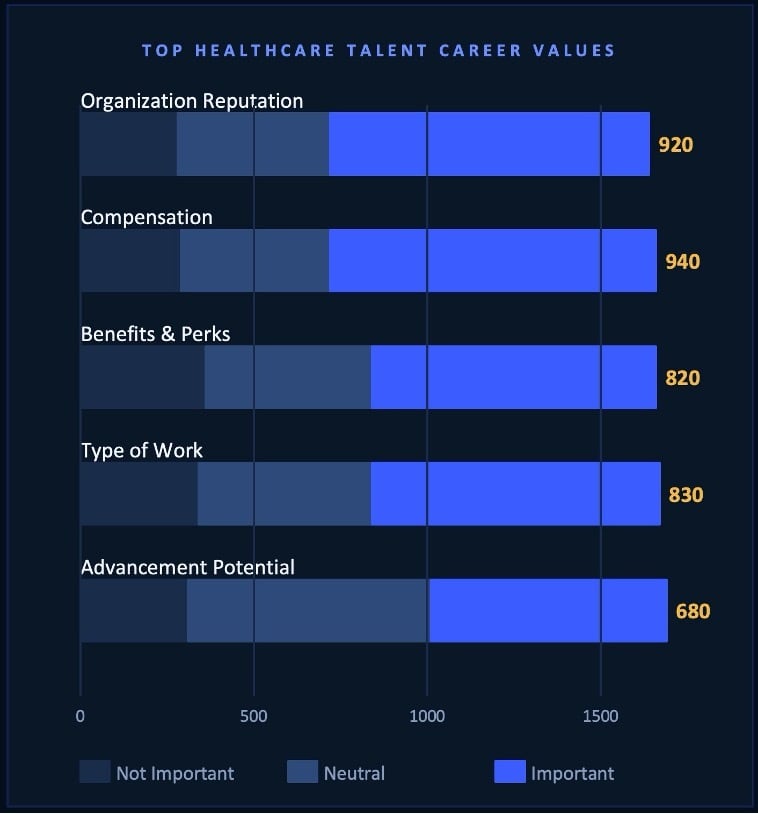
This chart shows what healthcare candidates truly value today. Compensation matters, but organization reputation and type of work are just as critical in shaping decisions.
Hiring Is No Longer a Straight Line
In today’s hiring environment, nurses are not moving in a clean line from search to apply to hire. They are bouncing between channels, conversations, and moments of research.
Every delay becomes a drop-off risk. That means hiring needs to feel connected, not fragmented.
Reach, trust, conversion, and retention all need to work together. That means showing up consistently, keeping your message clear, and moving quickly when candidates engage.
Engagement Happens Across Channels
“Omnichannel works in healthcare because nurses are not all in one place. They’re not all motivated by the same thing. They’re not always ready to apply after the first touch,” Caitlin explained.
Search, social, programmatic, and referrals all play a role. Each creates a different kind of touchpoint. LinkedIn is strong for professional storytelling. Platforms like Facebook and Instagram bring community and peer voices forward.
Programmatic paid media can scale awareness and nurture candidates over time.
Together, these moments stack. And that is what moves candidates from awareness to action.
AI Is Changing How Candidates Decide
Candidates are no longer just searching. They are asking detailed questions about fit, support, and day-to-day reality. And oftentimes, they are using AI.
This is where GEO comes in. Clear, structured, and specific content makes it easier for AI to understand and surface your roles accurately. That includes:
- Answering real questions directly
- Keeping information consistent across channels
- Making role expectations easy to find
“Strong recruitment content has to work for both human readers and AI-driven discovery,” Wrona stressed, noting that vague or outdated materials risk misrepresentation by AI tools.
What to Do Next
Look at your experience through a candidate’s perspective. Tighten your messaging,replace general statements with real proof,. show the job as it is.
Focus less on getting more people in the door and more on getting the right people to stay.
If you are looking for a partner to help you navigate this complex landscape, Appcast can help. Our integrated recruitment marketing platforms offers everything you need to engage, attract and hire the right talent for your open roles. Schedule a time to talk to use today.
Want the Full Story?
This is just the highlight reel.
👉 Watch the on-demand webinar to go deeper into the data, real examples, and practical strategies you can start using right away.
Here are 5 GEO-friendly FAQ questions and answers you can add to the end of your blog. They’re written in your tone and designed to match how candidates (and AI tools) actually phrase and surface questions:
FAQs: Healthcare Hiring in 2026
1. What do healthcare candidates care about most in 2026?
Healthcare candidates are looking beyond compensation. They want clarity on schedules, staffing support, leadership, and whether the realities of the job match what is promised. Many are asking a bigger question about sustainability, whether they can stay in the role long-term without burning out.
2. Why isn’t posting more jobs leading to better hiring outcomes?
More job postings don’t solve a fit problem. Today’s hiring challenges come from misalignment, not lack of visibility. When expectations are unclear, you attract the wrong candidates, which leads to faster turnover and
higher costs.
3. How does employer brand impact healthcare hiring?
Employer brand acts as an early filter. Candidates research organizations before applying and often decide whether to engage based on what they find. When career sites rely on stock photos and generic messaging, candidates struggle to trust what they see. Clear, real, and specific content performs better.
4. What is GEO and why does it matter for healthcare recruiting?
GEO, or Generative Engine Optimization, is about structuring content so AI tools can understand and surface it accurately. As candidates ask more detailed questions through AI tools, your hiring content needs to clearly answer those questions and stay consistent across channels.
5. What is the most effective healthcare hiring strategy today?
The most effective strategies focus on alignment over volume. That means clearly defining roles, setting expectations upfront, and creating content that helps the right candidates opt in while encouraging others to opt out. Strong hiring strategies also connect reach, trust, and engagement across multiple channels.